
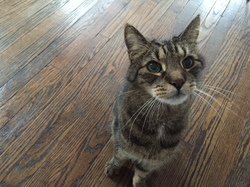
A cat living in an apartment can easily reach 18-20 years of age. Feral cats have a life expectancy of around 5-6 years. This huge difference is due to accidents, diseases, parasites, poor feeding habits, and stress. The indoor pet is well nourished, vaccinated and protected from accidents/stress.
The care the cat receives during her life is an important point if we want our cat to have a happy long life. When sickness or injury are neglected, the aging process is accelerated.
An older cat requires a caring and loving environment. Stress should be minimized. Cats love routine, a good diet and a caring human will make an older cat happy. Older cats are more sedentary and less energetic. They are less tolerant of extremes of heat and cold. They seek out warm spots and sleep longer. When disturbed, they are cranky and irritable. They don't like to be bothered, they need their space and their time.
A visit to the vet every year should be scheduled.
The annual checkup should include physical examination, blood tests, stool exam, and urinalysis. Kidney disease is quite common in older cats.
Danger Signs in older cats: If you see any of the following signs, take your cat to the vet as soon as possible.
The care the cat receives during her life is an important point if we want our cat to have a happy long life. When sickness or injury are neglected, the aging process is accelerated.
An older cat requires a caring and loving environment. Stress should be minimized. Cats love routine, a good diet and a caring human will make an older cat happy. Older cats are more sedentary and less energetic. They are less tolerant of extremes of heat and cold. They seek out warm spots and sleep longer. When disturbed, they are cranky and irritable. They don't like to be bothered, they need their space and their time.
A visit to the vet every year should be scheduled.
The annual checkup should include physical examination, blood tests, stool exam, and urinalysis. Kidney disease is quite common in older cats.
Danger Signs in older cats: If you see any of the following signs, take your cat to the vet as soon as possible.
- Weight loss
- Coughing, problems breathing
- Your cat is always thirsty and urinates frequently
- Weakness - difficultly moving
- Constipation or diarrhea
- A lump anywhere on the body
Kitty in NY has caregivers specialized in older cats. These caregivers have had their own cat till she died of old age. They are used to giving medication and caring for an older cat. Your cats will be in good hands. Contact us to find the best option for your cat in Manhattan, Brooklyn or Queens. We'll be glad to help you.
 RSS Feed

